
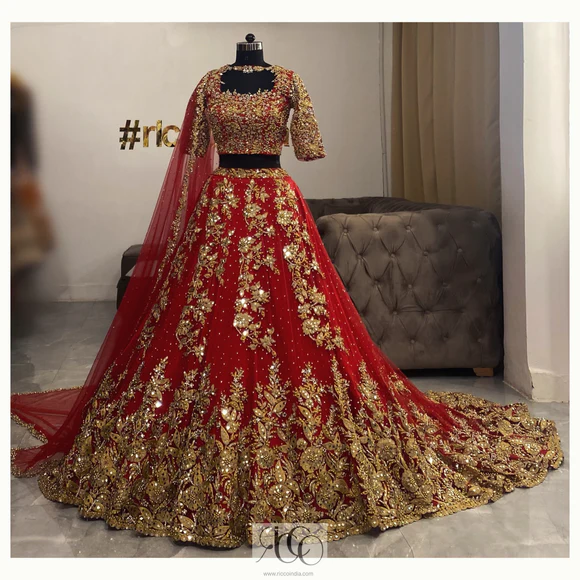
Lahenga
A lehenga (also known as ghagra choli) is a deeply rooted traditional attire that reflects the richness of Indian culture, craftsmanship, and evolving fashion. While it may seem like just a festive outfit, the lehenga carries layers of history, symbolism, and design complexity that make it one of the most celebrated garments for women. 🪶 Historical Background The lehenga traces its origins back to the Mughal era, when royal women wore long, embroidered skirts paired with fitted blouses and ornate dupattas. Over time, this attire spread across regions like Rajasthan, Gujarat, and North India, where it adapted to local traditions. In Rajasthan and Gujarat, it became part of everyday traditional wear, while in other regions it evolved into a garment reserved for grand occasions. 👗 Structure and Components in Depth A lehenga is more than just three pieces—it is carefully designed for both beauty and function: Lehenga (Skirt): The skirt is usually stitched with multiple panels (called kalis) to create volume. Some bridal lehengas can have up to 20–30 panels, giving a dramatic flare. The waistband may be elastic, drawstring (nada), or structured with hooks for support. Choli (Blouse): The choli is tailored to fit closely and enhance the upper body shape. It may include padding, boning, or modern cuts like off-shoulder, halter neck, or corset style. Back designs are often decorative, featuring tassels (latkans), tie-ups, or deep cuts. Dupatta: The dupatta can completely transform the look. It may be worn in multiple styles—over the head (traditional bridal), across one shoulder, or draped like a saree pallu. Bridal outfits often include two dupattas for a more regal appearance. 🧵 Craftsmanship and Regional Techniques India is known for its diverse embroidery styles, many of which are used in lehengas: Zardozi: Heavy gold embroidery, often used in royal bridal wear Gota Patti: Appliqué work using gold/silver ribbons, popular in Rajasthan Bandhani (Bandhej): Tie-dye technique from Gujarat and Rajasthan Kundan & Stone Work: Adds a jewelry-like sparkle Phulkari: Floral thread work from Punjab Mirror Work (Abla Bharat): Common in Gujarati lehengas Each technique reflects the identity of a specific region and often requires skilled handwork that can take weeks or months. 🎨 Color Symbolism Colors in lehengas are not just aesthetic—they carry meaning: Red: Marriage, love, and prosperity (traditional bridal color) Maroon: Strength and deep commitment Pink: Romance and femininity Gold: Wealth and luxury White/Ivory: Modern elegance (earlier associated with mourning, now trending in weddings) Pastels (peach, mint, lavender): Contemporary and subtle sophistication 💃 Occasions and Usage Lehengas are worn for a variety of occasions, each requiring a different style: Weddings: Heavy, embroidered lehengas with rich fabrics Festivals (like Navratri, Eid, Diwali): Bright, colorful, often lighter for comfort Engagement/Reception: Fusion or designer lehengas with modern cuts Casual/Party Wear: Minimal embroidery, lightweight fabrics